Physical Address
304 North Cardinal St.
Dorchester Center, MA 02124
Physical Address
304 North Cardinal St.
Dorchester Center, MA 02124
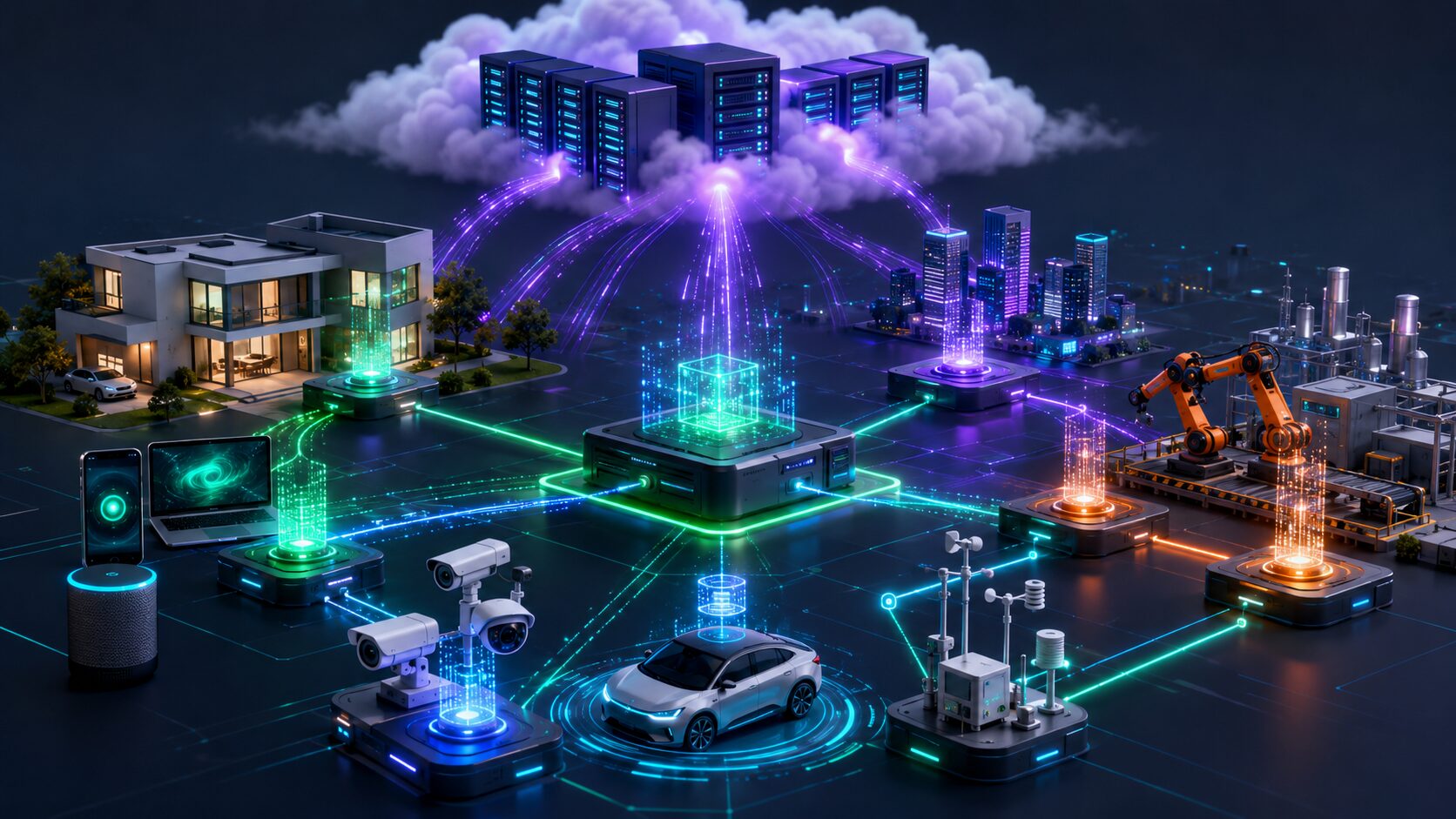
As more devices connect to the internet, sending every piece of data to a distant cloud server is no longer always the fastest or most efficient solution. Smart homes, connected vehicles, factories, healthcare devices, and security cameras often need to process information in real time. Even a small delay can affect performance.
This is where Edge Computing comes in. Instead of processing data only in large cloud data centers, edge computing brings computing power closer to where the data is created. This reduces latency, saves bandwidth, and enables faster decision-making.
In this guide, you’ll learn What Is Edge Computing, how it works, how it compares with cloud computing, its advantages and limitations, and the industries that are rapidly adopting this technology.
What Is Edge Computing? Edge computing is a method of processing data closer to the device or location where the data is generated instead of sending everything to a distant cloud data center.
For example, imagine a smart security camera installed outside your home. If every video frame had to travel to a remote server before detecting movement, there could be noticeable delays. With edge computing, much of the processing happens near the camera itself or on a nearby edge server, allowing it to recognize motion almost instantly.
This approach improves speed, reduces internet traffic, and allows many connected devices to work more efficiently.
Unlike traditional cloud computing, where nearly all processing happens in centralized data centers, edge computing distributes computing power across multiple locations closer to users and devices.
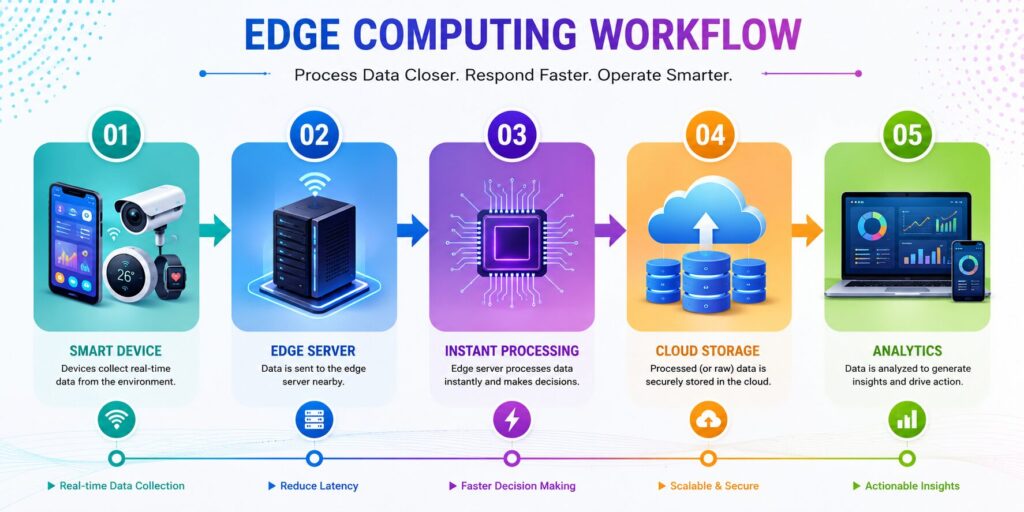
Although the technology behind edge computing is advanced, the basic concept is easy to understand.
A device creates data.
Examples include:
Instead of immediately sending all data to the cloud, nearby computing hardware—called an edge device or edge server—processes the most important information.
If immediate action is required, the edge device responds without waiting for the cloud.
For example:
Only necessary information is sent to the cloud for:
This reduces internet bandwidth while keeping important historical data available.
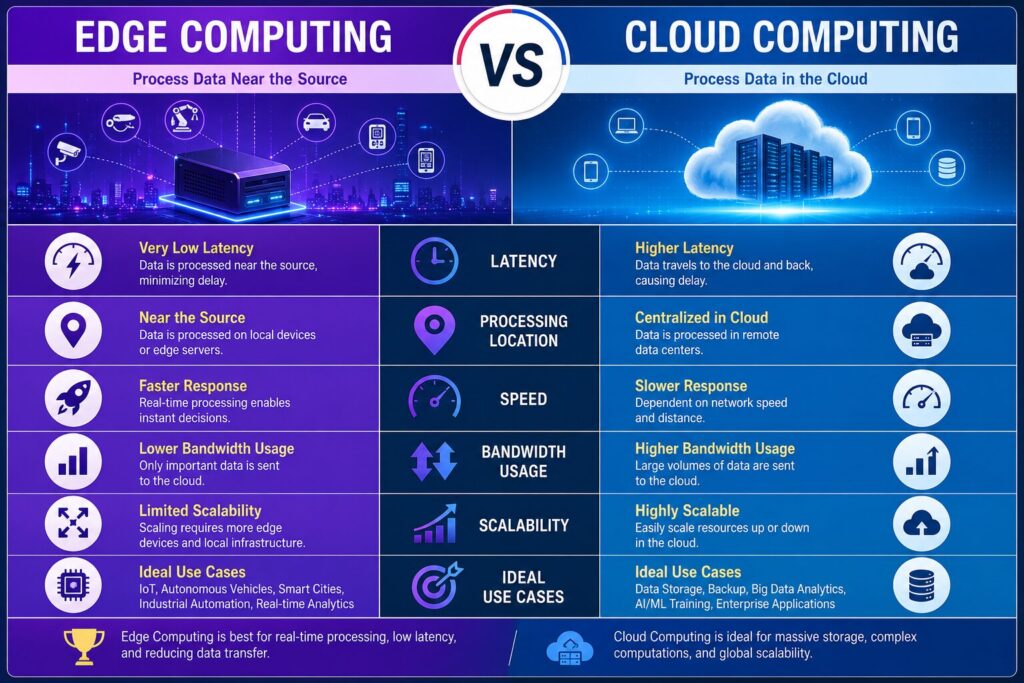
Although both technologies often work together, they have different purposes.
| Feature | Edge Computing | Cloud Computing |
|---|---|---|
| Processing Location | Near the device | Remote data center |
| Response Time | Very Fast | Moderate |
| Internet Dependency | Lower | Higher |
| Bandwidth Usage | Lower | Higher |
| Real-Time Processing | Excellent | Good |
| Large Data Storage | Limited | Excellent |
In practice, many organizations use a combination of both technologies rather than choosing only one.
Edge computing includes several characteristics that make it valuable for modern applications.
Because processing happens close to the source, responses are much faster.
Important information can be analyzed immediately without waiting for cloud communication.
Only useful or summarized data is sent to the cloud, reducing network traffic.
Some edge devices continue working even when internet connectivity is temporarily unavailable.
Organizations can deploy multiple edge devices across different locations while still using cloud services for centralized management.
Businesses and consumers benefit from edge computing in many ways.
Applications respond almost instantly because data travels a much shorter distance.
Video streaming, gaming, smart home devices, and industrial systems all benefit from quicker response times.
Sending less information across the internet reduces bandwidth consumption.
Sensitive information can sometimes remain on local devices instead of being transmitted to remote servers.
Local processing allows certain systems to continue operating during temporary internet outages.
Edge computing is becoming increasingly important for:
Edge computing already powers many technologies that people use every day.
Smart thermostats, security cameras, doorbells, and voice assistants often process commands locally to improve speed.
Autonomous vehicles cannot wait several seconds for cloud responses.
They must analyze traffic, pedestrians, and road conditions almost instantly.
Factories use edge computing to monitor equipment, detect problems, and automate production lines in real time.
Medical devices can analyze patient information immediately, allowing doctors to respond more quickly during emergencies.
Retailers use edge computing for:
Despite its advantages, edge computing also has limitations.
Organizations may need additional hardware across multiple locations.
Maintaining hundreds or thousands of edge devices can become complex.
Each connected device must be properly protected to reduce cybersecurity risks.
Edge devices usually have less processing power than large cloud data centers.
Because of these limitations, edge computing and cloud computing often complement each other rather than compete.
When learning about edge computing, many beginners misunderstand its purpose.
Avoid these common misconceptions:
Even small businesses can benefit from edge technology in areas such as smart security systems and connected devices.
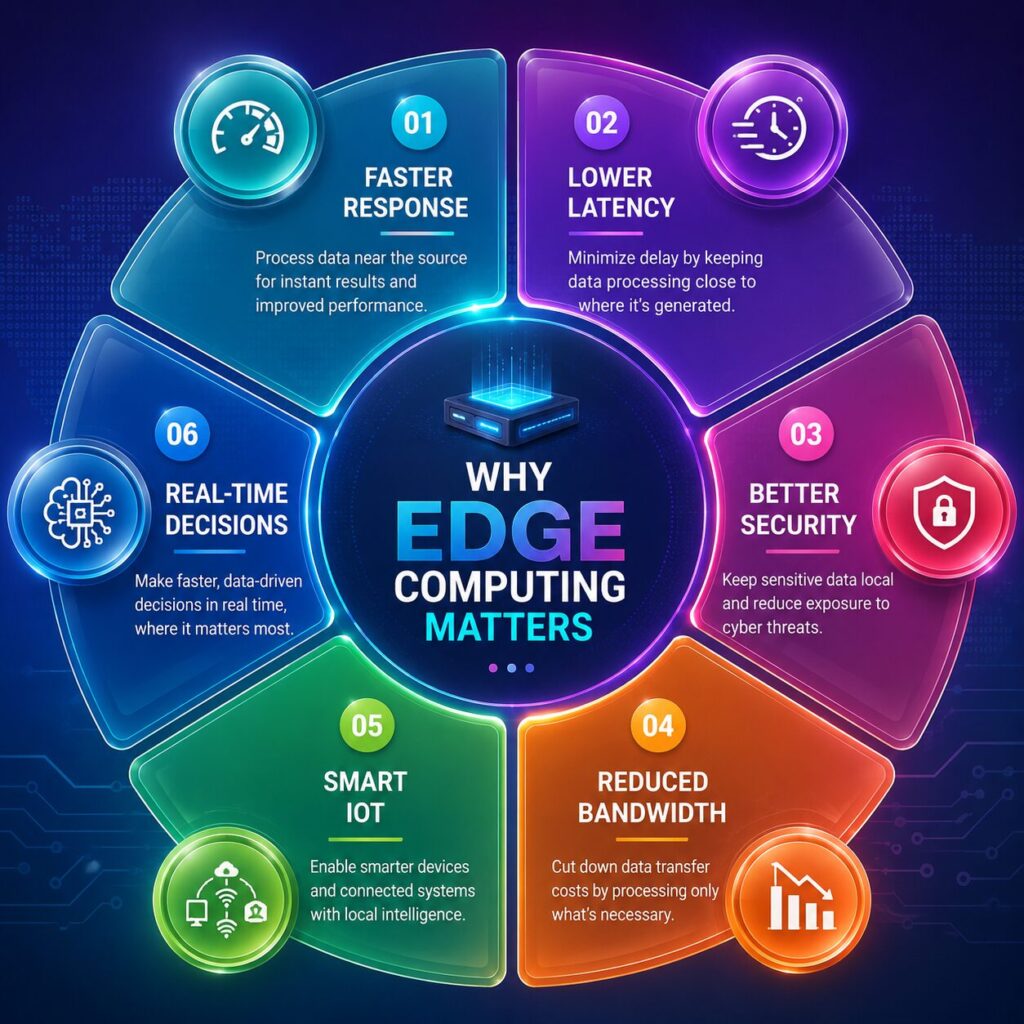
Edge computing is a computing model where data is processed closer to the device that generates it instead of relying entirely on remote cloud servers.
Edge computing processes data locally for faster responses, while cloud computing performs most processing in centralized data centers.
It reduces latency, improves performance, lowers bandwidth usage, and supports real-time applications.
No. Most modern systems use both edge computing and cloud computing together.
Manufacturing, healthcare, transportation, retail, telecommunications, agriculture, and smart cities are among the biggest adopters.
It can improve privacy by processing some data locally, but edge devices still require strong security practices and regular updates.
Yes. Businesses using smart cameras, IoT devices, point-of-sale systems, or local automation can benefit from faster local processing.
Yes. As connected devices continue to grow, edge computing is expected to play an increasingly important role alongside cloud computing.
Understanding What Is Edge Computing helps explain how modern technology delivers faster, smarter, and more reliable digital experiences. By processing information closer to where it is created, edge computing reduces delays, lowers bandwidth usage, and enables real-time decision-making that traditional cloud-only systems cannot always provide.
Rather than replacing cloud computing, edge computing works alongside it. Local devices handle time-sensitive tasks, while the cloud provides large-scale storage, analytics, and centralized management. This combination offers the best of both worlds.
As smart homes, connected vehicles, IoT devices, and industrial automation continue to expand, edge computing will become an increasingly important part of the technology we use every day.
This article is published by Tivorenza.com to help readers understand technology in a simple and practical way. We regularly update our technology guides to ensure they remain accurate, beginner-friendly, and practical for students, professionals, business owners, and everyday internet users.

