Physical Address
304 North Cardinal St.
Dorchester Center, MA 02124
Physical Address
304 North Cardinal St.
Dorchester Center, MA 02124
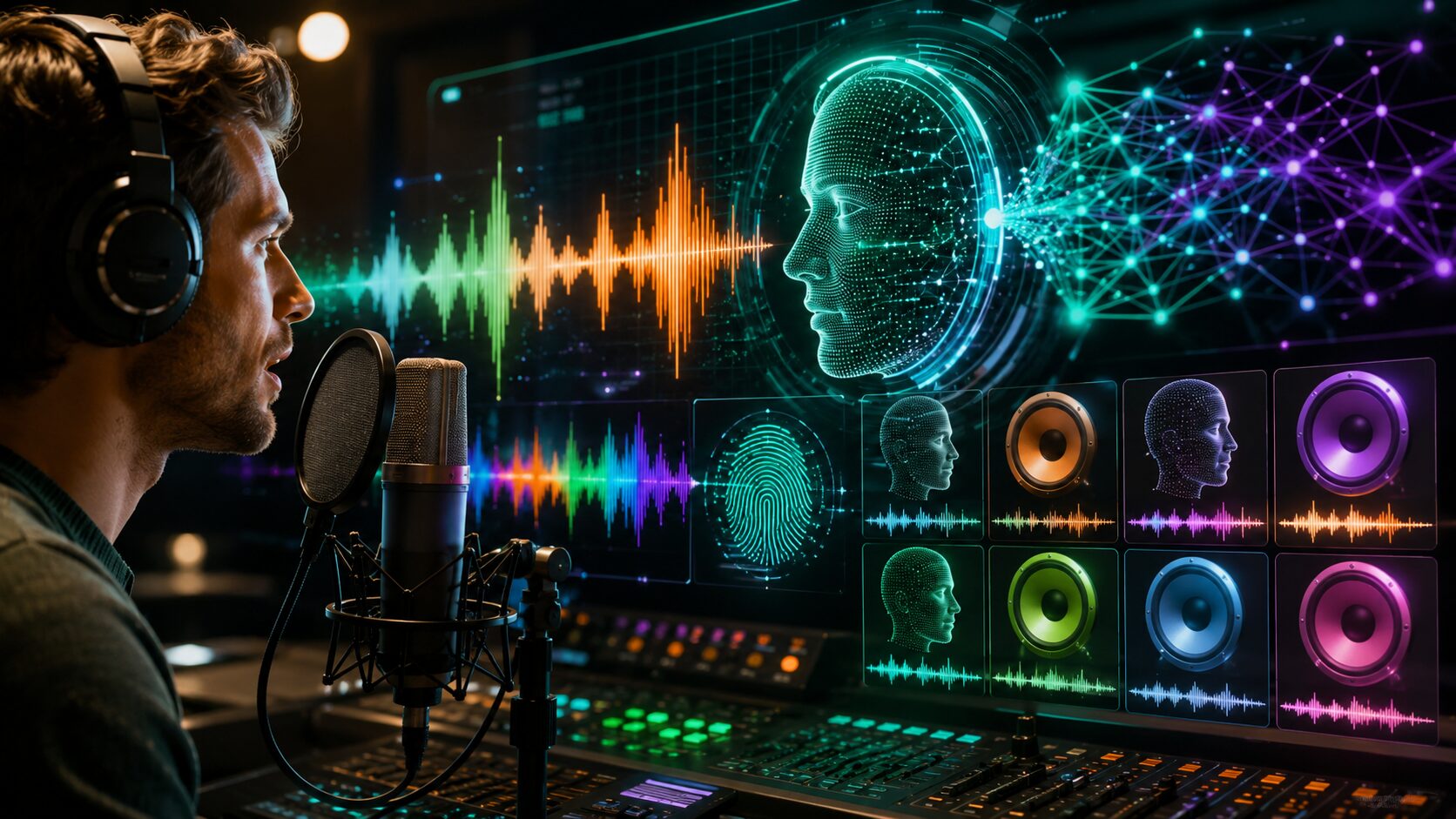
Imagine listening to an audiobook narrated in your own voice, preserving the voice of a loved one, or creating multilingual videos without recording every sentence again. These are just a few examples of what modern AI voice cloning technology makes possible.
Unlike traditional text-to-speech systems that rely on pre-recorded synthetic voices, AI voice cloning can analyze a person’s unique speaking style and generate new speech that closely resembles the original voice. The technology has improved rapidly in recent years, making AI-generated voices sound more natural, expressive, and realistic than ever before.
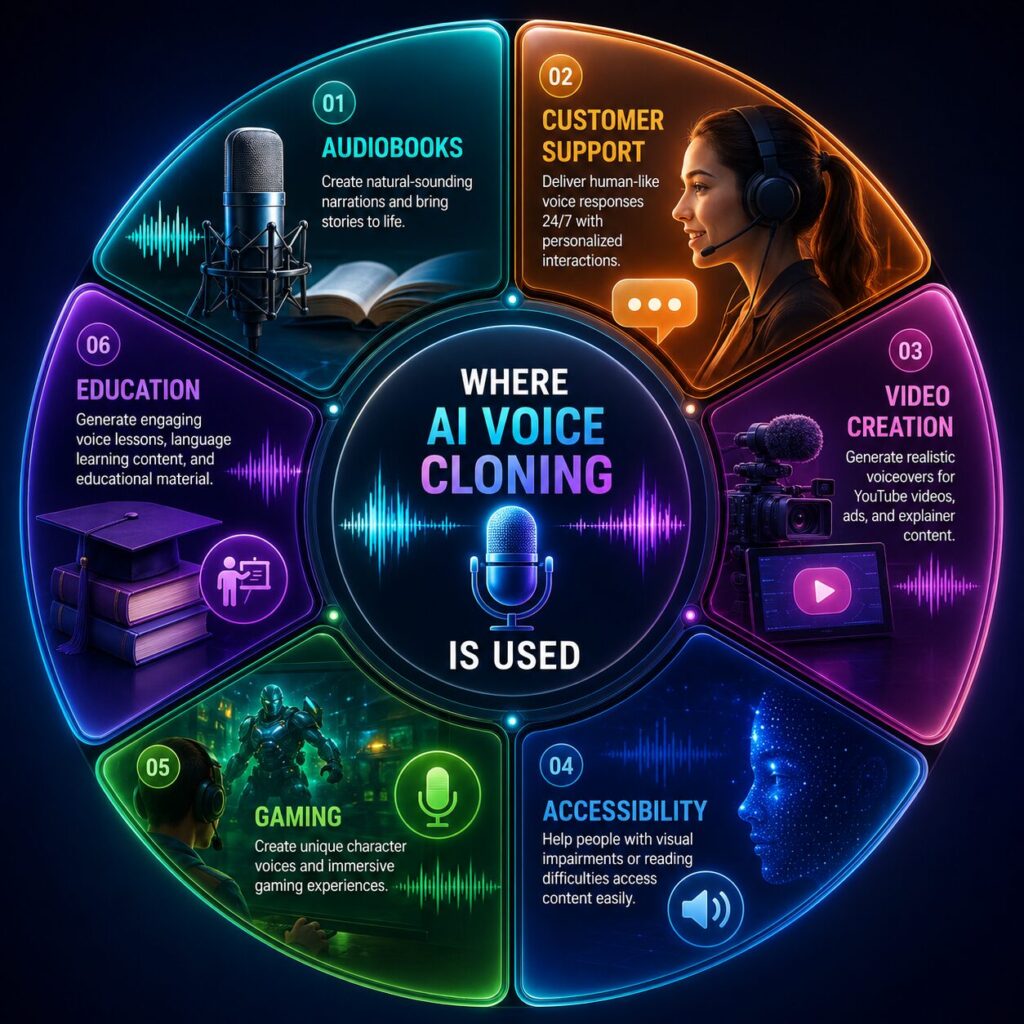
Today, voice cloning is used in content creation, customer support, accessibility tools, education, entertainment, gaming, and business communication. At the same time, it has also raised important discussions about privacy, consent, and responsible use.
In this guide, you’ll learn How AI Voice Cloning Works, the technology behind it, where it’s used, its benefits, limitations, and the ethical considerations everyone should understand.
AI Voice Cloning is a technology that creates a digital version of a person’s voice by analyzing recordings of their speech. After learning characteristics such as pronunciation, tone, pitch, rhythm, and speaking style, the system can generate entirely new sentences that sound similar to the original speaker.
Unlike traditional voice recording, the speaker doesn’t need to record every possible sentence. Once the AI model has learned the voice, it can generate speech from new text while maintaining a similar vocal style.
This technology is often combined with text-to-speech systems, allowing written text to be converted into realistic speech using a cloned voice.
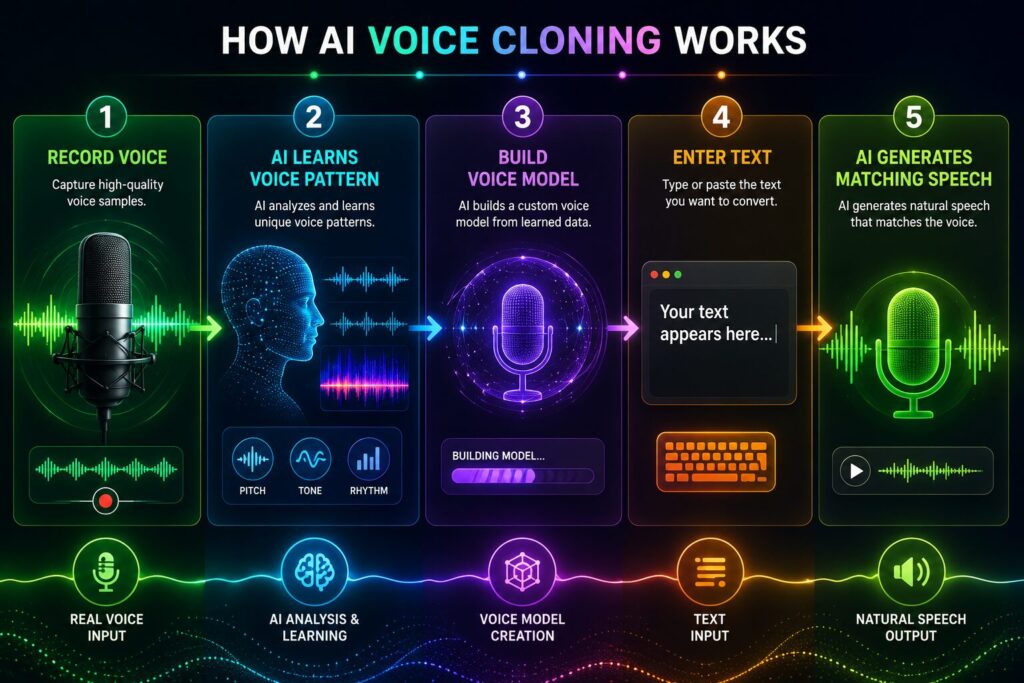
Although the technology behind AI voice cloning is complex, the overall process can be understood in a few simple steps.
The process begins with clear audio recordings of a person’s voice. The quality and variety of these recordings influence how accurately the AI can recreate the voice.
The AI examines patterns such as:
Instead of memorizing words, it learns the unique characteristics that make a voice recognizable.
Using the analyzed data, the AI creates a digital voice model that represents how the person typically speaks.
When new text is entered, the system converts the written words into phonetic sounds and predicts how the cloned voice would naturally pronounce them.
The AI produces a realistic audio output that closely matches the original speaker’s vocal characteristics, including rhythm and intonation where supported.
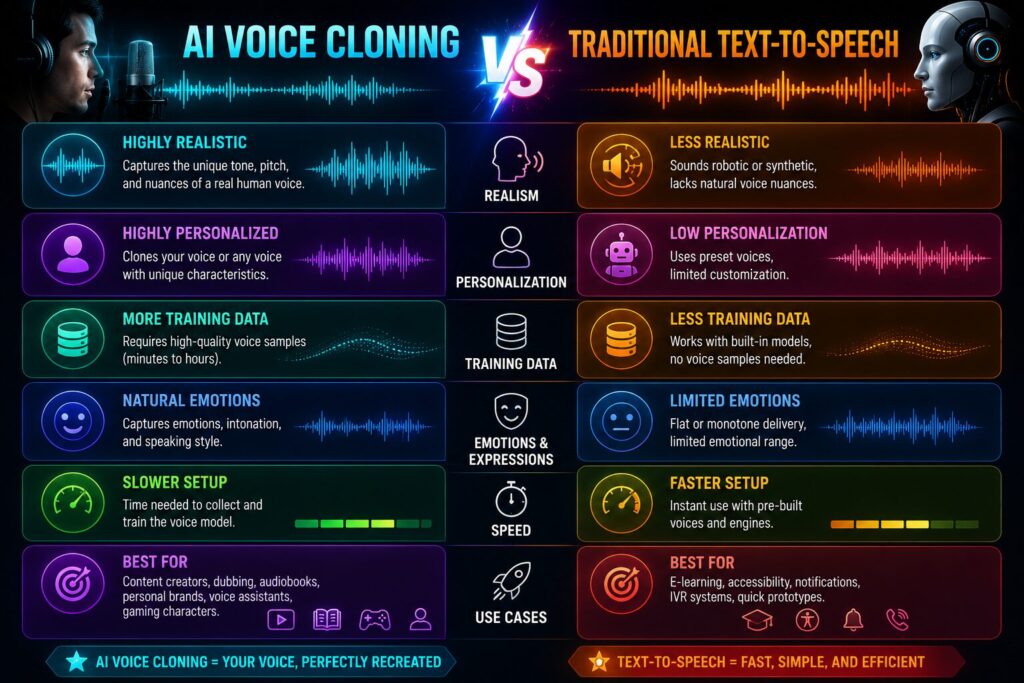
| Feature | AI Voice Cloning | Traditional Text-to-Speech |
|---|---|---|
| Uses a Specific Person’s Voice | ✅ | ❌ |
| Personalized Output | ✅ | Limited |
| Emotional Expression | Better | Basic |
| Voice Training Required | Yes | No |
| Realism | Very High | Moderate |
| Suitable for Branding | Excellent | Limited |
Modern AI voice cloning platforms offer much more than simply converting text into speech.
Advanced AI models generate voices with realistic pronunciation, pacing, and intonation, making the output sound closer to human speech.
Users can create a unique voice model based on their own recordings or, where permitted, another authorized speaker’s voice.
Many platforms can generate speech in multiple languages while preserving much of the original voice’s characteristics.
Some advanced systems can produce different speaking styles, such as excited, calm, serious, or conversational tones.
Once the voice model has been created, generating new speech usually takes only a few seconds.
AI voice cloning offers practical advantages across many industries.
Creators can generate narration for videos, tutorials, podcasts, and presentations without recording every sentence manually.
People who have lost their natural speaking ability may use voice cloning technology to communicate using a digital version of their own voice, where appropriate and available.
Businesses can maintain a consistent voice across advertisements, training materials, and customer communications.
Teachers and educational platforms can create lessons, language-learning materials, and audiobooks more efficiently.
Game developers and filmmakers can create dialogue, temporary voiceovers, or localized content while reducing production time.
AI voice cloning is already being used in many practical scenarios.
Publishers can produce spoken versions of books more efficiently while maintaining a consistent narration style.
Businesses use AI-generated voices for interactive phone systems, appointment reminders, and automated customer service.
Content creators can quickly generate narration for YouTube videos, explainers, online courses, and product demonstrations.
Voice technology helps individuals with speech impairments communicate more naturally using personalized digital voices.
Companies can adapt educational content, marketing materials, and training videos for different languages while maintaining a recognizable speaking style.
Although impressive, voice cloning technology still has limitations.
Poor recordings with background noise can reduce the accuracy of the cloned voice.
While modern systems can express different tones, they may not always match the full emotional range of natural human speech.
Uncommon names, technical terms, or regional expressions may occasionally require manual adjustments.
The technology should always be used responsibly and with proper authorization to respect privacy and prevent misuse.
Because AI-generated voices can closely resemble real people, responsible use is essential.
Good practices include:
Responsible use helps build trust while reducing the risk of fraud or misinformation.
If you’re experimenting with voice cloning, avoid these common mistakes:
A careful review process helps ensure the final result sounds natural and appropriate.
AI voice cloning is a technology that creates a digital voice model capable of generating new speech that resembles a specific person’s voice.
The exact amount depends on the platform and desired quality. Some systems can create basic voice models from relatively short recordings, while higher-quality results generally benefit from more clean and varied audio.
No. Traditional text-to-speech uses prebuilt synthetic voices, while AI voice cloning aims to reproduce the characteristics of a specific person’s voice.
Many modern platforms support multiple languages, although quality and pronunciation may vary depending on the language and service.
Legality depends on how the technology is used and the laws in your jurisdiction. Using someone’s voice without authorization may violate legal or contractual rights.
Yes. Businesses use it for customer service, training materials, product demonstrations, marketing, and other communication tasks, provided they use it responsibly.
No. The quality depends on the training audio, the underlying technology, and the complexity of the requested speech.
Voice cloning is expected to become more natural, multilingual, and expressive while also incorporating stronger safeguards to support responsible and trustworthy use.
Understanding How AI Voice Cloning Works helps explain why this technology is becoming increasingly important across education, entertainment, accessibility, business, and digital content creation. By analyzing the unique characteristics of a person’s speech, AI can generate realistic voice output that saves time and opens new creative possibilities.
However, the same technology also requires responsible use. Consent, transparency, privacy, and security should always be considered when creating or sharing AI-generated voices. As voice cloning continues to improve, it has the potential to make communication more accessible, simplify content production, and support new forms of digital creativity while respecting ethical and legal boundaries.
This article is published by Tivorenza.com to help readers understand technology in a simple and practical way. We regularly update our AI guides to ensure they remain accurate, beginner-friendly, and useful for students, creators, professionals, and everyday internet users.

