Physical Address
304 North Cardinal St.
Dorchester Center, MA 02124
Physical Address
304 North Cardinal St.
Dorchester Center, MA 02124

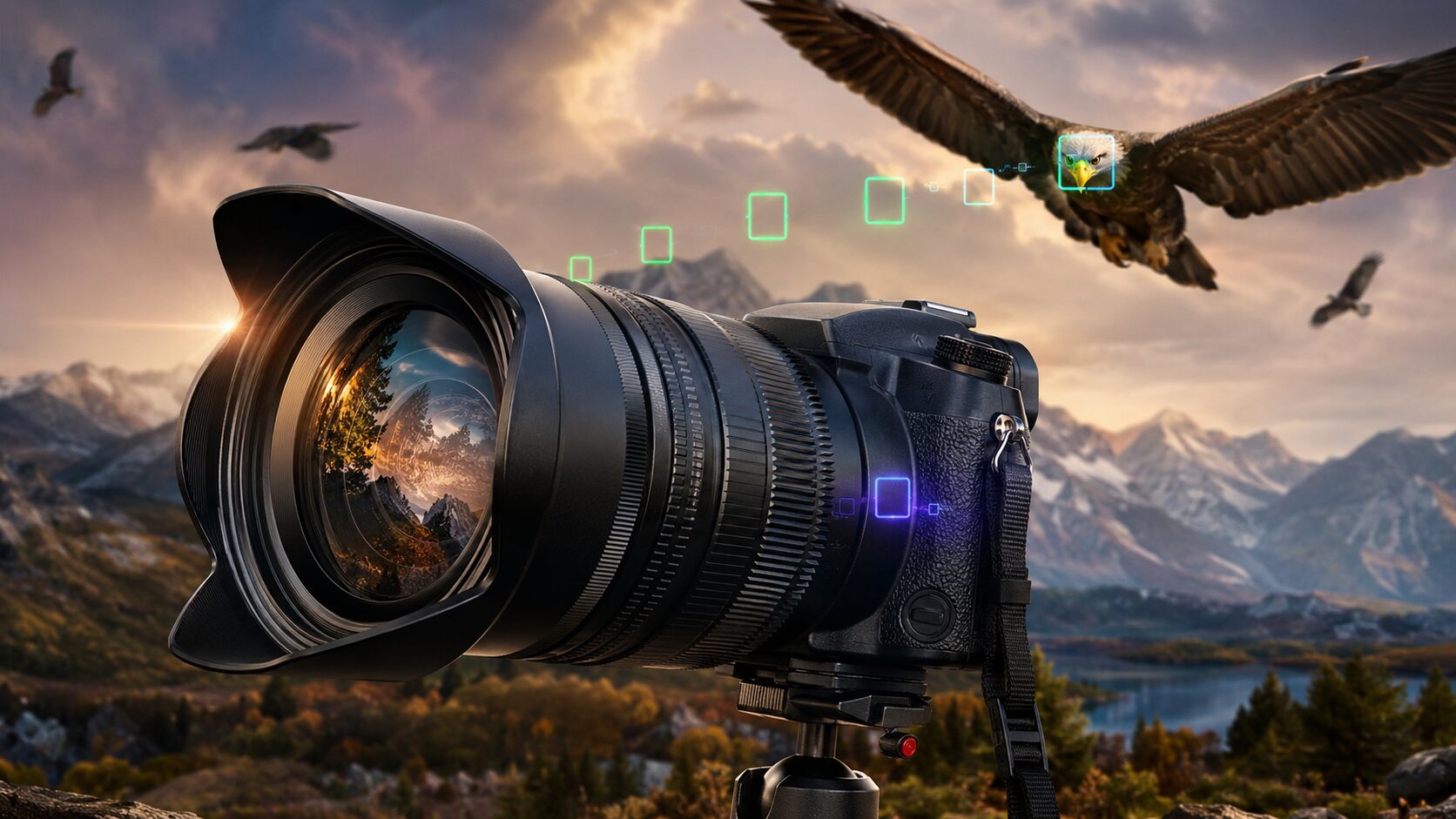
After nearly nine years of waiting, Sony has officially revived its legendary RX10 series with the launch of the Sony RX10 V. The new bridge camera keeps the signature all-in-one superzoom concept that made the RX10 IV popular among wildlife photographers, travelers, and sports enthusiasts, while introducing significant upgrades in autofocus, processing power, video capabilities, battery life, and overall usability.
The RX10 IV, released back in 2017, remained one of the most respected premium bridge cameras thanks to its 24–600mm Zeiss lens and excellent image quality. Instead of redesigning the successful lens, Sony has focused on improving the technology behind it. The RX10 V combines a familiar shooting experience with hardware borrowed from Sony’s Alpha mirrorless lineup, making it a much more capable camera for modern creators.
Whether you’re a wildlife photographer who doesn’t want to carry multiple lenses, a traveler looking for maximum versatility, or a content creator who needs high-quality photos and video from a single camera, the Sony RX10 V deserves attention.
In this guide, we’ll cover everything you need to know about the new camera, including its official specifications, biggest upgrades, comparison with the RX10 IV, pricing, and whether it’s worth buying.
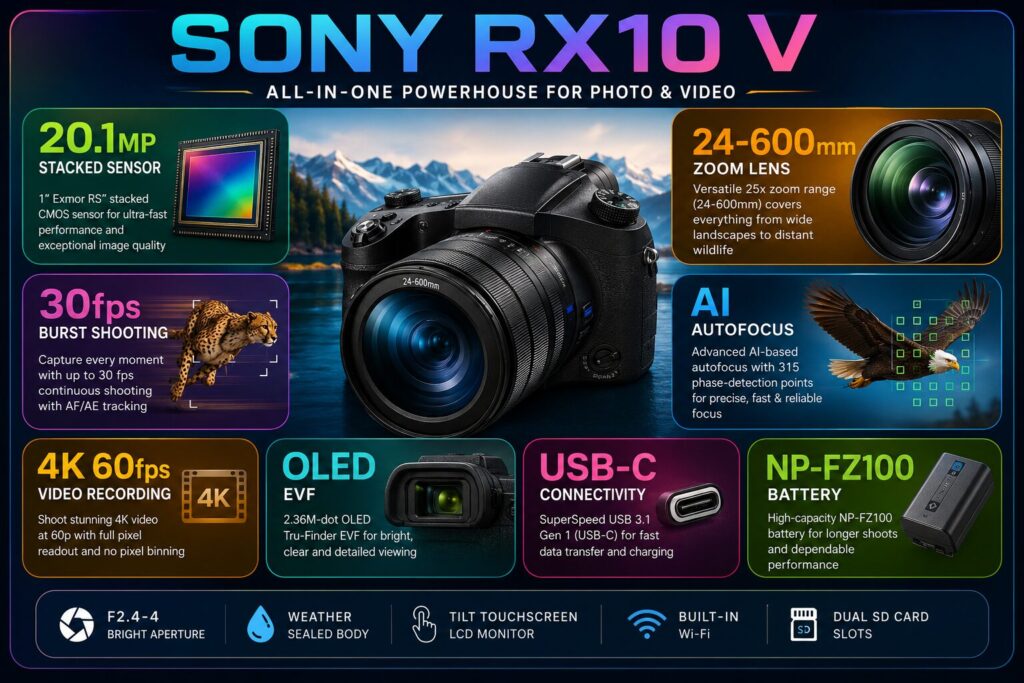
The Sony RX10 V isn’t a complete redesign, but it introduces meaningful improvements where photographers needed them most.
| Specification | Sony RX10 V |
|---|---|
| Sensor | 20.1MP 1-inch Stacked Exmor RS CMOS |
| Lens | ZEISS Vario-Sonnar T* 24–600mm (25x) f/2.4–4 |
| Continuous Shooting | Up to 30 fps |
| Autofocus | 575-point Real-Time AI AF |
| Video | 4K 60p Full Width, 4K 120p (crop) |
| Viewfinder | OLED Electronic Viewfinder |
| Battery | NP-FZ100 |
| Connectivity | USB-C, Wi-Fi, Bluetooth |
| Launch Price | $2,299.99 |
Sony has retained the versatile 24–600mm lens while upgrading the imaging pipeline with a newer stacked sensor, faster image processing, AI-powered subject recognition, and a redesigned body inspired by the Alpha series. The camera also gains a larger NP-FZ100 battery and USB-C connectivity for improved endurance and workflow.
One of the most significant improvements is the increase from 24fps to 30 frames per second with blackout-free continuous shooting. This makes it easier to capture birds in flight, fast-moving wildlife, and sporting events without missing decisive moments.
Sony has equipped the RX10 V with advanced Real-Time AI autofocus featuring 575 autofocus points and improved subject recognition.
The camera can better track:
This represents one of the biggest practical improvements over the RX10 IV, especially for action photography.
Video creators also benefit from meaningful upgrades.
The RX10 V now supports:
These additions make the camera far more attractive for hybrid creators than its predecessor.
One of the most practical upgrades is the switch to Sony’s larger NP-FZ100 battery, replacing the older NP-FW50 used in the RX10 IV.
Benefits include:
For creators who shoot all day, this upgrade alone can significantly improve the overall experience.
The addition of USB-C modernizes the camera and simplifies file transfers and charging.
Advantages include:
This is a welcome improvement over the older Micro USB standard.
Sony has refined the camera body with a more comfortable grip and updated button layout inspired by its Alpha mirrorless cameras.
The redesigned controls make long shooting sessions more comfortable while improving one-handed operation.
The AI processor doesn’t simply detect faces.
It can intelligently recognize and track different subjects including:
This greatly increases autofocus reliability when photographing unpredictable movement.
Sony clearly designed the RX10 V with both photographers and video creators in mind.
Useful additions include:
These features reduce the need for separate cameras for photography and video production.
Instead of replacing one of the RX10 series’ strongest features, Sony wisely kept the highly respected 24–600mm ZEISS Vario-Sonnar T* lens.
The lens remains ideal for:
Having this zoom range built into a single camera eliminates the need to carry multiple interchangeable lenses.
With its newer processing engine and AI capabilities, the RX10 V delivers a noticeably smoother shooting experience.
Users can expect improvements in:
These enhancements make the camera feel much more modern than its predecessor.
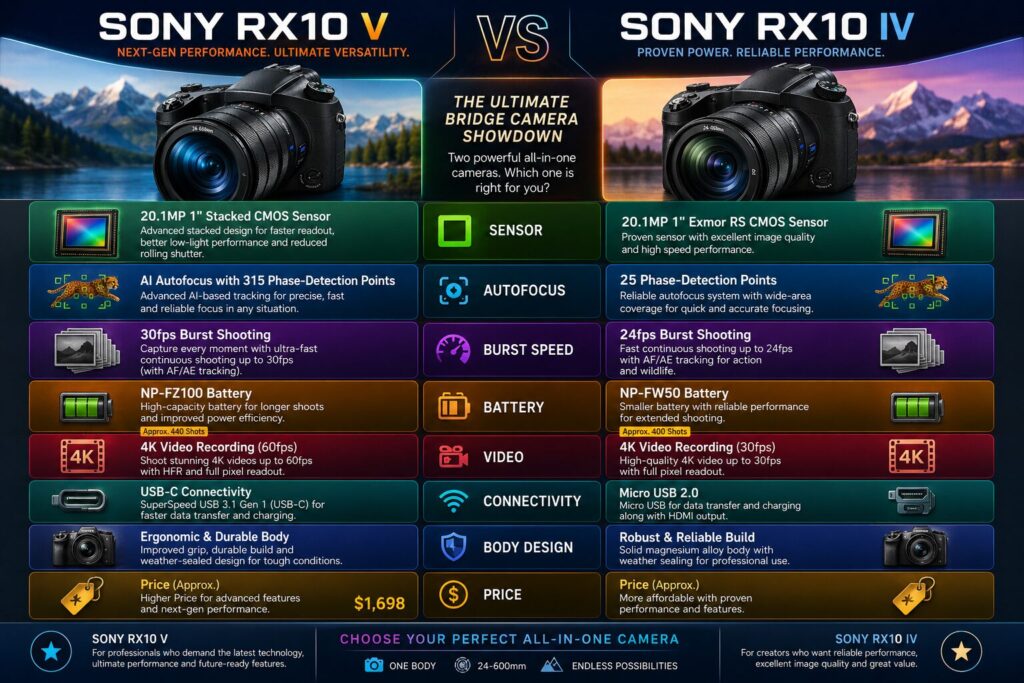
The RX10 IV was already one of the best bridge cameras available. The RX10 V builds on that foundation rather than replacing everything.
| Feature | Sony RX10 V | Sony RX10 IV |
|---|---|---|
| Sensor | 20.1MP Stacked CMOS | 20.1MP Stacked CMOS |
| Lens | 24–600mm f/2.4–4 | 24–600mm f/2.4–4 |
| Burst Speed | 30 fps | 24 fps |
| Autofocus | 575-point AI AF | 315-point AF |
| Video | 4K 60p | 4K 30p |
| Battery | NP-FZ100 | NP-FW50 |
| USB | USB-C | Micro USB |
| AI Subject Recognition | Yes | No |
The RX10 V focuses on meaningful usability improvements rather than dramatically changing the camera’s core design.
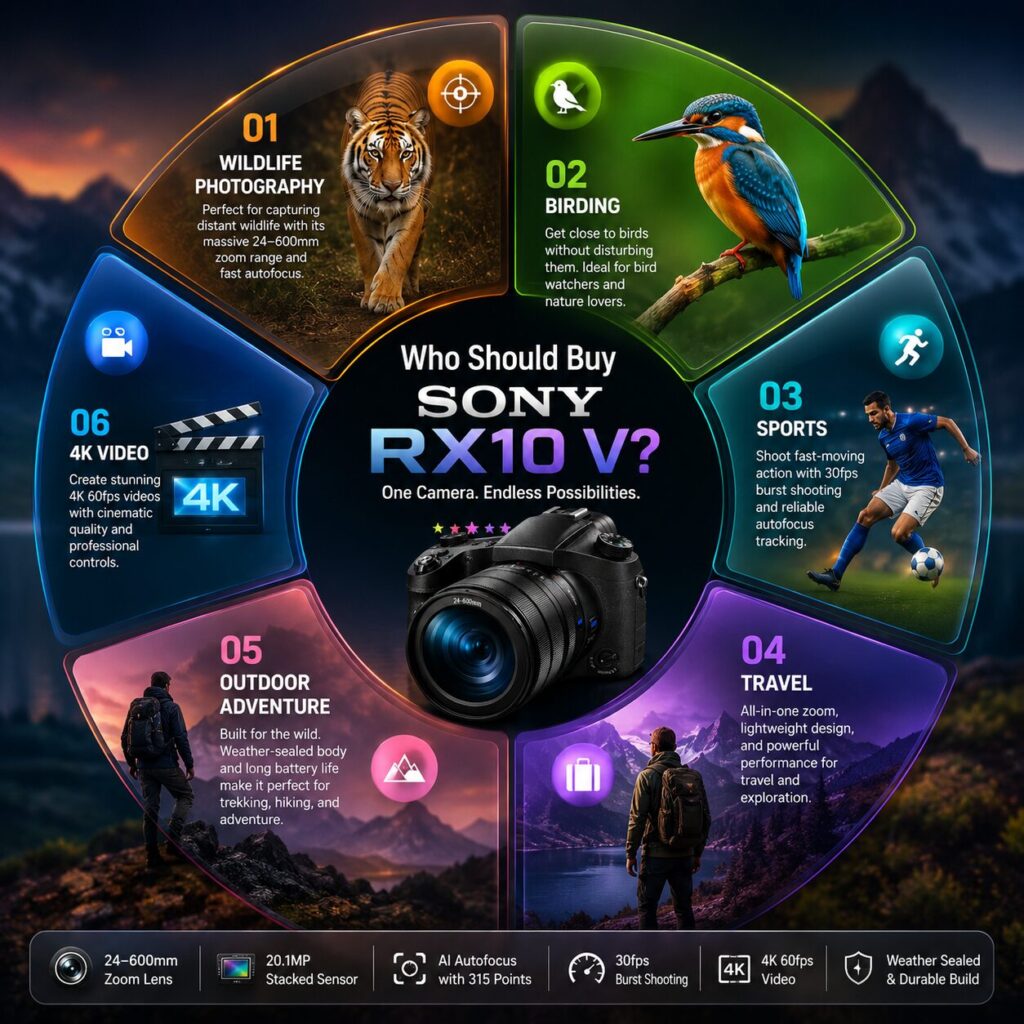
The RX10 V isn’t designed for everyone, but it’s an excellent choice for photographers who value versatility.
The long zoom lens and advanced autofocus make it well suited for photographing birds and animals without changing lenses.
Carrying one camera instead of several lenses makes travel lighter and more convenient.
Fast burst shooting and reliable subject tracking improve the chances of capturing decisive action.
Those producing both photos and videos can benefit from the camera’s improved recording features and autofocus performance.
Despite its strengths, the RX10 V may not suit every user.
You might consider another option if:
In those cases, other cameras may provide better value for your specific workflow.
The Sony RX10 V is a premium bridge camera featuring a built-in 24–600mm zoom lens, a 20.1MP stacked 1-inch sensor, AI-powered autofocus, and advanced photo and video capabilities.
Sony announced the RX10 V with a launch price of $2,299.99. Prices may vary by region and retailer.
No. Like previous RX10 models, the RX10 V has a fixed ZEISS 24–600mm lens.
Yes. It supports 4K 60p recording, with additional high-frame-rate options available for certain modes.
Yes. The long zoom range, AI subject recognition, and fast continuous shooting make it particularly suitable for wildlife and bird photography.
The biggest improvements include AI-powered autofocus, faster burst shooting, improved battery life, USB-C connectivity, and enhanced video features.
It can be used by beginners, but its advanced features and premium price make it better suited to enthusiasts and professionals.
If you want a powerful all-in-one camera with an extensive zoom range and modern autofocus capabilities, the RX10 V is one of the strongest bridge camera options currently available.
The Sony RX10 V proves that the bridge camera category still has plenty to offer. Rather than reinventing the RX10 formula, Sony has focused on meaningful improvements that photographers and creators have been asking for—smarter autofocus, faster performance, stronger video features, longer battery life, and modern connectivity.
For wildlife enthusiasts, travelers, sports photographers, and hybrid content creators, the combination of a versatile 24–600mm lens with AI-powered tracking makes the RX10 V a compelling all-in-one solution. While its premium price places it in enthusiast territory, it also eliminates the need to invest in multiple lenses, which can make it a practical long-term choice for many users.
This article is published by Tivorenza.com to deliver timely, accurate, and beginner-friendly technology news and buying guides. We regularly cover the latest cameras, AI innovations, software, and consumer technology to help readers make informed purchasing decisions.

