

The phone rings. The caller says they’re from your bank’s fraud team, and there’s been suspicious activity on your account. They sound professional. They know your name. Your heart starts thudding, and before you’ve had a moment to think, you’re answering their questions. If that scenario makes your stomach drop a little, you’re not alone — and you’re not naive for feeling rattled by it. Thousands of sensible, careful people get caught by the fake bank call scam every year. This guide walks you through exactly how the call works, what to listen for, and what to do — calmly, step by step.
It always starts with a call that sounds completely normal
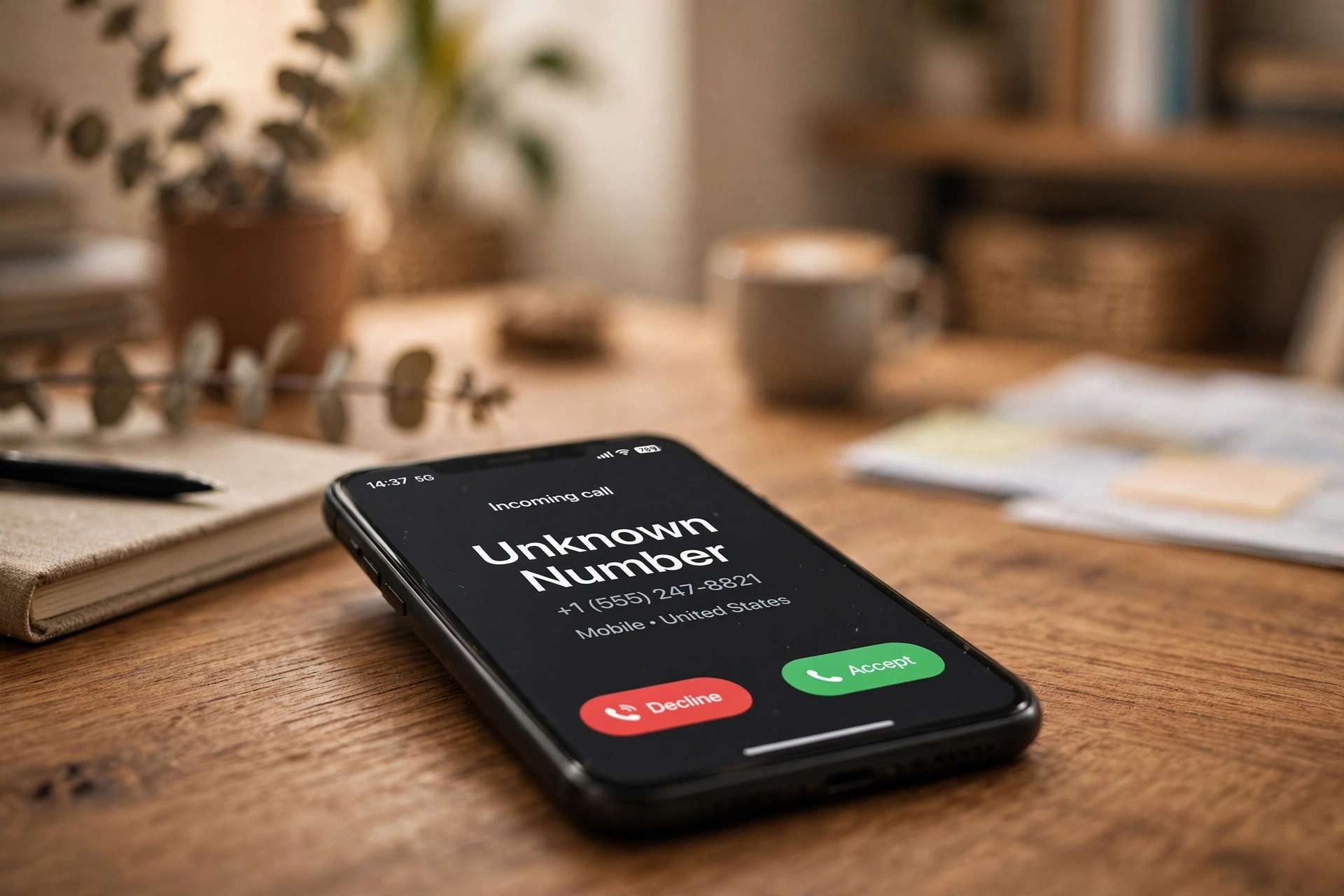
Here’s how it usually goes. Your phone rings from a number you don’t recognise — or, trickier still, from a number that looks like your bank’s real one. The person on the line introduces themselves with a full name and a job title: “fraud prevention team,” “security department,” something official-sounding. They tell you there’s a problem. Unusual activity. A payment you didn’t make. Someone trying to access your account.
None of this is random. Scammers buy stolen personal details in bulk — names, addresses, sometimes even partial account numbers — so the call feels legitimate from the first sentence. When a stranger greets you by name and mentions your postcode, your brain files them under “trustworthy” before you’ve consciously decided anything. That’s the whole trick. The panic does the rest.
And the panic is deliberate. They’ll tell you the threat is happening right now. Money moving as you speak. A window of minutes to stop it. Under that kind of pressure, most people stop asking questions and start following instructions. That’s not a character flaw — it’s how human brains work under stress. Understanding that is the first step to beating the scam.
Why clever people fall for it
There’s a stubborn myth that only gullible people get scammed. The truth is less comfortable: scam call centres train their staff the way real call centres train theirs. Scripts, objection handling, tone of voice coaching. Some operations even rehearse answers to the exact questions a suspicious customer would ask.
They also borrow authority. A caller who says “I’m calling from the fraud team” is borrowing your bank’s reputation the way a fake uniform borrows a real one’s. Add background noise that sounds like a busy office, a reference number they ask you to write down, and a callback number that matches the one on your card — every detail is designed to make hanging up feel like the risky choice.
Here’s the part worth sitting with: the scammers don’t need you to believe them for an hour. They need about ninety seconds of compliance — long enough to get a code from a text message, or to get you to move money to a “safe account.” The whole performance is built around speed. Slow it down, and it falls apart.
The red flags, in plain language
Forget memorising a long checklist. In the middle of a stressful call, you need a handful of signals that are easy to spot. These are the big ones.
They called you, but they ask you to prove who you are. Real banks almost never ring customers out of the blue about fraud and then ask for passwords, PINs, or full card numbers. If the person who called you is demanding your secrets, the direction of trust is backwards. That’s your signal.
Everything is urgent, right now, no time to think. “The transfer is going through.” “Your account will be frozen in ten minutes.” Real fraud teams can wait. They deal with suspicious activity all day, and they’d rather you call back on the official number than rush. Urgency is the scammer’s favourite tool because it switches off your critical thinking.
They ask for codes from your texts. Those one-time codes your bank sends are the keys to your money. Your real bank will never ask you to read them out — to anyone, ever. If a caller asks, you are talking to a criminal. Full stop.
They want you to move money to a “safe” or “secure” account. Banks do not move your money to safe accounts over the phone. There is no such procedure. If you hear those words, hang up.
They get pushy when you hesitate. Try saying “I’d like to call the bank back directly.” A genuine employee will say “of course.” A scammer will argue, warn you not to hang up, or claim calling back will let the criminals win. Pressure at that moment is the clearest confession you’ll get.
The one sentence that ends the call safely
You don’t need a clever comeback. You don’t need to catch them out or keep them talking. You need one sentence, said politely, and then you hang up:
“Thanks — I’ll call the bank back on the number on my card.”
That’s it. You don’t have to explain yourself. You don’t have to be rude. Say it, end the call, and take a breath. If the call was genuine — and it almost certainly wasn’t — the bank will be completely fine with you calling back. No real fraud team has ever been offended by a customer verifying their identity.
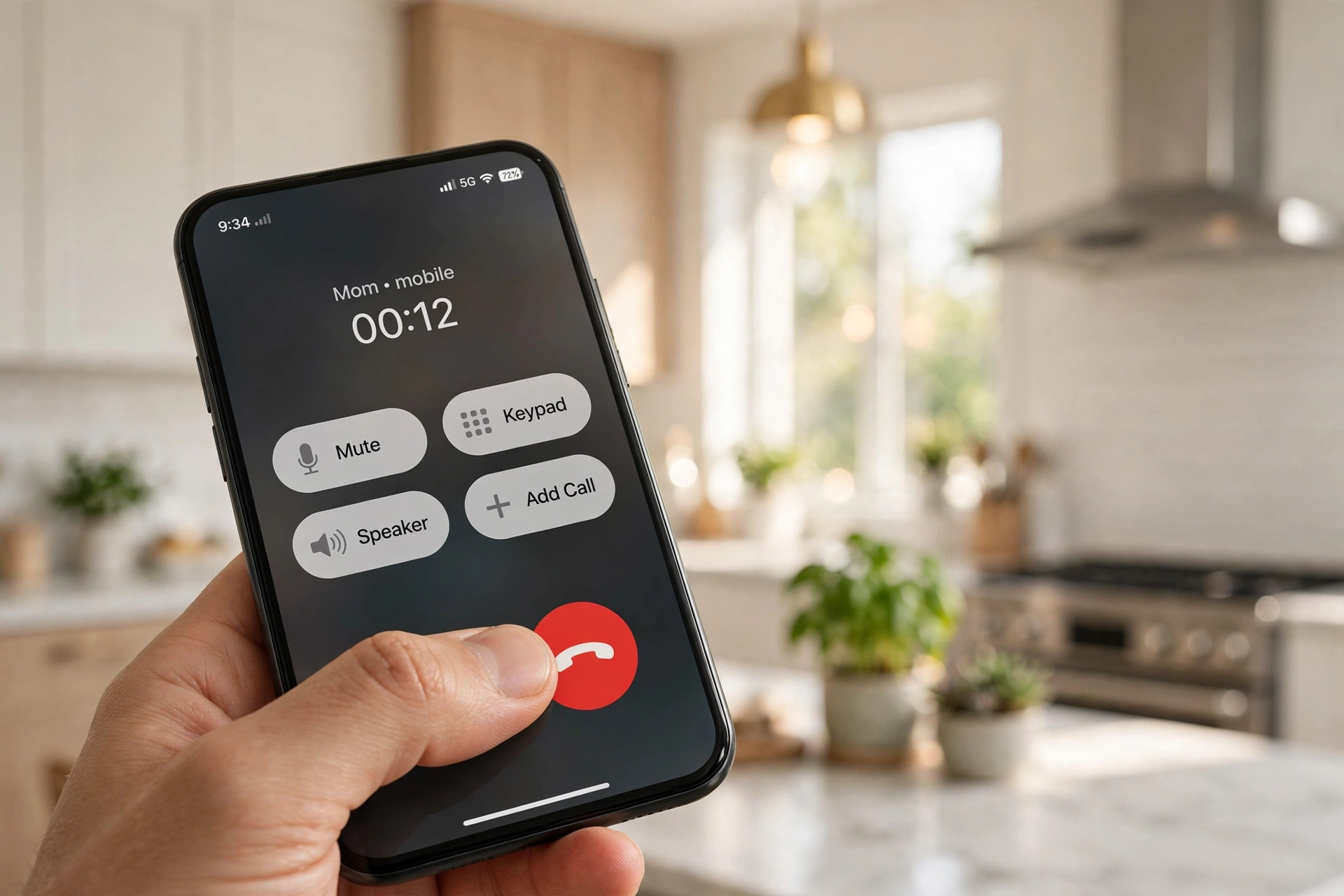
Then call your bank yourself. Use the number on the back of your bank card, or the one in your banking app — never a number the caller gave you, and never a number from a text they sent. When you get through, tell them what happened. They’ll check your account and confirm whether anything was actually wrong. In the vast majority of cases, nothing was. The “emergency” existed only in the caller’s script.
What to do in the ten minutes after you hang up
So the call is over. Your hands might be shaking a bit — that’s normal. Here’s what to do next, in order.
First, call your bank on their real number. As above: the number on your card or in your app. Tell them about the call. Even if you’re fairly sure it was a scam and you gave nothing away, they want to know. It helps them warn other customers, and they’ll put a note on your account.
Second, think hard about what you shared. Did you read out any codes? Confirm a password? Give a card number? Be honest with yourself — there’s no shame in it, and knowing exactly what leaked decides what happens next. If you shared codes or passwords, tell the bank immediately so they can lock things down and reset them.
Third, check your accounts. Log in to your banking app or online banking — yourself, directly — and look at recent transactions. Anything you don’t recognise, flag to the bank straight away. Most banks have strong fraud refund policies when you report quickly.
Fourth, report the number. In the UK, you can forward scam texts to 7726, and report scam calls to your mobile provider or to Action Fraud. It takes a minute, and it helps investigators spot patterns. If the call came with a text, don’t click any links in it — just forward and delete.
Fifth, tell someone. Seriously. Tell a friend, a family member, a neighbour. Scams thrive on embarrassment and silence — people don’t warn each other because they feel foolish. One conversation over a cup of tea can protect a whole circle of people. The scammers are counting on your silence. Don’t give it to them.
Questions people usually ask after a scare
What if I already gave them a code or password? Call your bank immediately on their official number and tell them exactly what you shared. They can freeze the relevant access, reset credentials, and watch for suspicious activity. Speed matters here — the sooner you call, the smaller the window for the scammer.
What if I moved money to the “safe account”? Call your bank right now and explain what happened. Ask them to try to recall the transfer. Also report it to the police via Action Fraud. Recovery isn’t guaranteed, but fast reporting genuinely improves the odds, and banks have dedicated teams for exactly this.
Can they scam me if I just stayed on the line but said nothing? Simply listening can’t empty your account — they need information or actions from you. But staying on the line is still risky, because skilled callers are very good at steering a conversation toward a “yes.” Hanging up promptly is always the safer move.
The number on my screen matched my bank’s real number. How? It’s called number spoofing, and it’s depressingly easy. Scammers can make any number appear on your caller display. That’s why “the number looked right” can never be your proof — only calling back on a number you looked up yourself counts.
Should I feel embarrassed if I fell for it? No — and that’s not empty comfort. These are professional criminals running rehearsed scripts refined over thousands of calls. Feeling shaken is human. The only mistake would be staying silent about it instead of reporting it.

You’ll spot the next one in seconds
Here’s the reassuring part: once you’ve seen the anatomy of a fake bank call, you can’t unsee it. The urgency, the backwards identity checks, the request for codes, the “safe account” — they show up in nearly every version of this scam, because the script works and scammers rarely rewrite a winning script.
Keep that one sentence ready: “Thanks — I’ll call the bank back on the number on my card.” Teach it to your parents, your grandparents, anyone who might freeze in the moment. The fake bank call scam depends on surprise and speed. A calm person with a plan is the one thing it can’t handle.