Physical Address
304 North Cardinal St.
Dorchester Center, MA 02124
Physical Address
304 North Cardinal St.
Dorchester Center, MA 02124

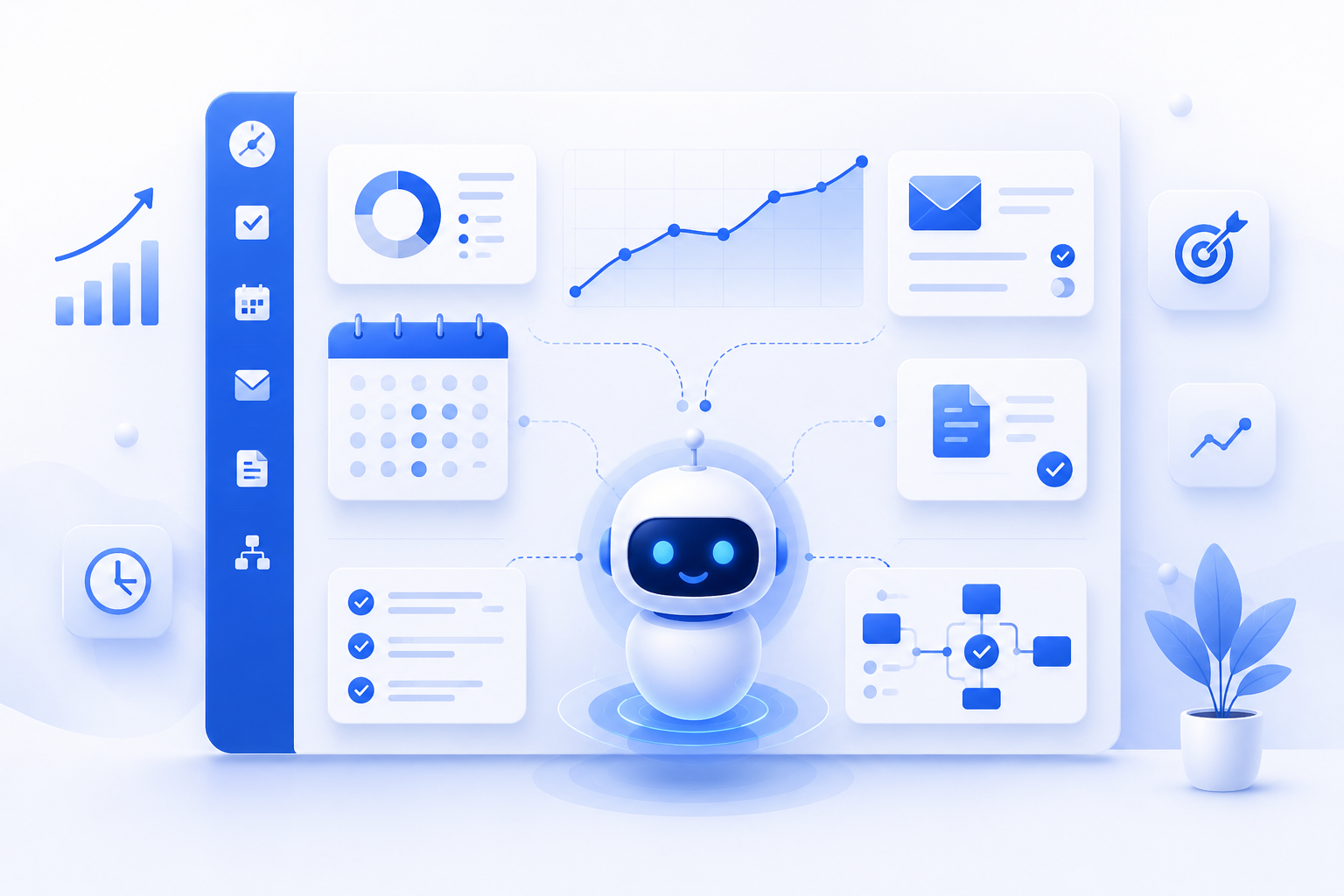
Somewhere in the last year, “AI agent” quietly replaced “AI tool” as the phrase everyone wants to use. Every product page, every pitch deck, every LinkedIn post — agents, agents, agents. Ask three different companies what an “AI agent” actually does for them, though, and you’ll probably get three different answers, and at least one of them will just be describing a chatbot with a fancier name.
That’s the problem. The terminology moved faster than the understanding did.
So let’s slow down for a second and actually sort this out — because picking the wrong one isn’t just a semantic mistake. It’s the difference between a tool that saves your team two hours a week and a system that quietly makes decisions nobody signed off on.

Think of an AI tool as a very capable assistant who only moves when you ask.
You open ChatGPT, or Claude, or whatever writing assistant your team uses, you type a request, it does the thing, you review it, done. Draft an email, summarize a document, generate a product description, clean up a spreadsheet formula. The human is in the loop for every step — starting the task, checking the output, deciding what happens next.
Most businesses, if they’re honest, are still operating almost entirely in this world. And that’s fine. It’s not a lesser version of AI adoption — it’s the version that actually fits how most teams work.

An agent is a different animal. You give it a goal, not a single instruction, and it figures out the steps on its own — searching, calling other tools, making small decisions, chaining actions together — until the goal is done or it hits a wall.
“Research our top five competitors and draft a comparison doc” is a tool-level request if you’re doing the research yourself and just asking AI to write the doc. It becomes agent-level the moment you ask the system to go find the information itself, decide what’s relevant, and assemble the whole thing without you checking in at every step.
That difference — autonomy over multiple steps — is really the whole ballgame. It’s not about which one is smarter. Plenty of “agents” out there are running on the same underlying models as the tools people use every day. What’s different is how much rope they’ve been given.
Here’s where a lot of companies get tripped up: they hear “agent” and assume it means better, when what it actually means is more responsibility on their end.
A tool that writes a bad email draft costs you thirty seconds of annoyance. You catch it before it goes out.
An agent that’s been given access to your inbox, your CRM, and instructions to “handle routine customer follow-ups” can send fifty bad emails before anyone notices something’s off. The mistake scales with the autonomy.
That’s not an argument against agents. It’s an argument for being deliberate about which tasks actually deserve that level of independence, and which ones are better off staying in the “human checks every output” category — at least for now.
Simple, high-volume, judgment-light tasks. Drafting. Summarizing. First-pass editing. Answering “what does this contract clause mean in plain English.” Generating variations of an ad headline. Cleaning messy data into a usable format.
These are jobs where speed matters more than independence, and where a human reviewing the output takes seconds, not minutes. Tools are cheaper to run, easier to audit, and far less likely to go sideways in a way you don’t notice until it’s a problem.
If your business is small, or your team is still getting comfortable with AI in general, this is genuinely the smarter place to spend your energy — not because agents are bad, but because tools are the version you can trust without building a whole governance process around them first.
Multi-step, repetitive workflows that follow a predictable pattern but involve too many small decisions to be worth doing by hand every time. Monitoring dozens of data sources for anomalies. Running a defined research process across multiple websites. Handling a customer support queue where 80% of the tickets follow the same handful of patterns.
The common thread: the task has real structure to it, the stakes of a mistake are manageable, and there’s a clear way to check the agent’s work after the fact rather than during every single step.
Agents make less sense for anything involving legal exposure, financial commitments, or public-facing communication that hasn’t been reviewed. Give it time — that list will probably shrink as the tooling around oversight gets better. It’s not there yet for most companies.

Before adding either to a workflow, it helps to ask a few blunt questions:
That last one gets asked less often than it should. A lot of “agent” rollouts right now are really just tools wearing a trendier label, and a lot of genuine automation opportunities are getting ignored because teams assume they need something flashier than what actually does the job.
Most businesses don’t need an army of autonomous agents running their operations. They need a handful of well-chosen AI tools handling the repetitive stuff well, and maybe one or two carefully scoped agents handling a specific, well-understood workflow where the risk of a bad outcome is genuinely low.
The companies getting real value out of this stuff in 2026 aren’t the ones chasing the newest label. They’re the ones who actually mapped out their workflows, figured out where autonomy helps versus where it just adds risk, and built from there.
Start smaller than you think you need to. Tools first, agents once you’ve earned the trust to hand something off.