
You don’t need a million followers to make money on Instagram.
That might sound surprising when most of the creators we see online have massive audiences, but follower count is only one part of the equation. A smaller account with a highly interested audience can sometimes be more useful to a brand than a large account whose followers rarely interact with its content.
Instagram has gradually turned from a photo-sharing app into a full creator and commerce platform. Today, money can come from brand collaborations, affiliate commissions, products, services, subscriptions and other creator features.
The important thing for a beginner is not trying every monetisation method at once. It is figuring out what your audience is likely to pay for and which income model fits the content you already create.
Your Instagram profile needs to look like a business before you treat it like one
Before thinking about income, look at your profile from the perspective of someone discovering you for the first time.
If your account is about smartphones, for example, a visitor should understand that within a few seconds. Your username, profile photo, bio and recent posts should all point in roughly the same direction.
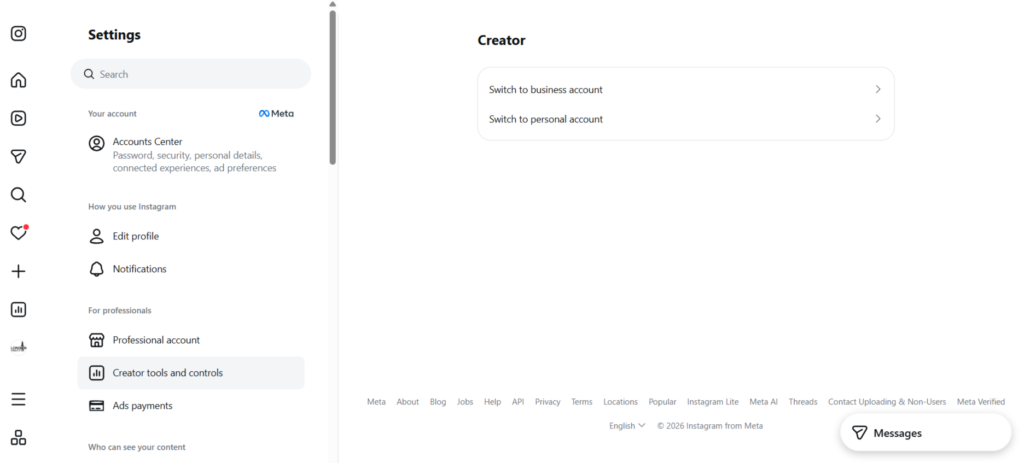
Switching to a professional account is also worth considering. Instagram provides professional accounts for creators and businesses, giving them access to features such as insights and professional tools.
Your bio should answer a simple question:
Why should someone follow you?
And if you eventually want to sell something, work with brands or send people to a website, make sure your profile gives them an obvious next step.
A clean profile with a clear niche will usually do more for a beginner than spending hours trying to increase follower numbers through random content.
You can start earning before your account becomes “big”
There is no universal follower number at which Instagram suddenly starts paying everyone.
That’s an important distinction.
A creator with 2,000 followers can potentially earn through affiliate marketing or selling a product. Someone with 20,000 followers may have opportunities for small brand collaborations. A larger creator can combine sponsorships with subscriptions, products and other monetisation options.
What matters is whether the audience trusts you.
For example, imagine an Instagram account with 5,000 followers dedicated entirely to budget smartphones. If those followers regularly ask for buying recommendations and click the creator’s product links, that account can have genuine commercial value.
Meanwhile, an entertainment page with 100,000 followers might struggle to sell anything because its audience isn’t connected to a specific buying decision.
So instead of asking “How many followers do I need to make money on Instagram?”, a better question is:
“What does my audience come to me for?”
That answer will tell you much more about your monetisation potential.
Brand deals can become an income source surprisingly early

Sponsored content is probably the monetisation method most people associate with Instagram.
The model is straightforward. A company pays you to create content featuring its product or service, and you publish that content to your audience.
That could be a Reel, Story, photo post, product demonstration or another agreed format.
You don’t necessarily need to wait for brands to discover you. Smaller creators can approach businesses directly, particularly when their niche matches the company’s target customers.
A fitness creator could contact a sportswear company. A tech creator could approach an accessory brand. A food creator could work with a local restaurant or packaged-food company.
The amount a creator can charge isn’t determined by followers alone. Engagement, audience location, niche, content quality, previous campaign performance and the type of deliverables can all affect the value of a collaboration.
This is why there is no reliable universal rate such as “$100 per 10,000 followers”.
Two accounts with the same follower count can have completely different commercial value.
And whenever content is sponsored, creators should follow Instagram’s branded-content disclosure requirements and applicable advertising rules.
Affiliate marketing is one of the easiest models to understand

You don’t need your own product to make money from Instagram.
Affiliate marketing lets you recommend someone else’s product and receive a commission when your audience makes a qualifying purchase through your tracking link.
Suppose you run a camera-focused account.
You could create a Reel explaining the camera accessories you use and direct interested viewers to affiliate links. If someone purchases through your tracked link, you receive a commission according to the affiliate programme’s terms.
The model works particularly well when the product naturally fits the content.
Tech, beauty, fashion, fitness and home-related accounts are common examples because followers often want product recommendations.
But there is a trap here: promoting random products simply because they offer a commission can damage audience trust.
If you wouldn’t recommend something without getting paid, it probably shouldn’t be on your page.
Your Instagram account can become a shop window for your own business
You don’t have to make money from Instagram to make money because of Instagram.
This distinction is important.
If you already sell something, Instagram can become a discovery and marketing channel that sends potential customers to your business.
That could be:
- Physical products
- Digital downloads
- Courses
- E-books
- Templates
- Handmade products
- Software
- Merchandise
A product-focused Reel can introduce something to thousands of potential customers. Stories can answer questions or show how the product works. Demonstrations can remove doubts that might otherwise stop someone from buying.
Depending on your country, business type and Instagram’s available commerce features, some shopping experiences can also be integrated directly into Meta’s ecosystem.
The broader point is simple: you don’t need Instagram to be your checkout counter for it to be valuable to your business.
Selling a service can be even easier than selling a product
If you have a useful skill, Instagram can work as a portfolio and lead-generation platform.
A graphic designer can showcase designs. A photographer can publish their work. A video editor can share before-and-after examples. A fitness professional can demonstrate expertise. A social media manager can publish case studies.
In these situations, your followers aren’t necessarily the customers.
Your content is demonstrating what you can do, while interested people contact you for paid work.
A strong profile can therefore generate clients even if the account isn’t particularly large.
For a beginner, this can actually be one of the fastest ways to turn Instagram attention into real income because you don’t need thousands of people to buy something. You may only need a few clients.
Instagram itself has monetisation tools too
Meta has introduced several ways for eligible creators to earn directly through Instagram.
One example is Instagram Gifts, which allows fans to purchase virtual gifts and send them to creators on eligible Reels. Meta has expanded access to Gifts across multiple markets, with eligibility depending on factors such as account type, age, policy compliance and location.
Subscriptions are another option available to eligible creators. They allow followers to pay a recurring fee in exchange for subscriber-only content and other benefits.
The exact tools available to you can vary by country and account, so it’s better to check the Monetisation section of your professional dashboard rather than relying on an old blog post claiming that every creator has access to the same features.
This is especially important because Meta regularly changes creator programmes, eligibility rules and product availability.
What if you don’t want to show your face?
You can build an Instagram business without becoming the face of the account.
Faceless accounts can work in niches such as:
- Technology
- Motivation
- News
- Education
- Finance
- Quotes
- Travel
- Recipes
- Product recommendations
The monetisation model doesn’t fundamentally change.
A faceless technology page could use affiliate links. An educational account could sell digital resources. A niche product page could promote its own store.
The challenge is that faceless pages still need to offer something original and useful. Simply reposting other people’s Reels may generate views, but it isn’t a strong long-term business model and can create copyright or monetisation problems.
Even a quotes page can be monetised, but the content needs a business behind it
Quote accounts are a good example of why follower count alone doesn’t tell the whole story.
A page can build an audience around motivational or inspirational content and later make money through affiliate recommendations, sponsored posts, digital products, books, merchandise or other relevant offers.
But there needs to be a logical connection between the audience and the product.
If someone follows a page for motivational quotes, selling a random electronic gadget to them just because an affiliate programme pays well isn’t likely to work.
A better approach would be something connected to the reason they followed the page in the first place.
Don’t build your entire income around Instagram’s algorithm
This is probably the biggest mistake beginners can make.
You can spend months building an audience and still have little control over how many people see your next post.
Instagram can change its recommendation system, features and monetisation policies. A Reel that gets 500,000 views today may not get the same reach tomorrow.
That’s why experienced creators try to build assets outside the platform too.
An email list, website, online store, digital product or another social platform can give you additional ways to reach your audience.
Instagram can remain your main discovery engine without being the only place where your business exists.
The smartest monetisation method depends on what you already have

If you’re starting with a small but engaged audience, affiliate marketing or services may be easier than waiting for Instagram’s native monetisation tools.
If you have a strong personal brand, sponsorships can become attractive.
If you already have your own products, Instagram can help drive sales.
If you have a loyal community, subscriptions and fan-support features may make sense.
And if you have expertise in something valuable, selling a service can sometimes generate more money from a few customers than millions of Reel views ever could.
This is why chasing views alone can be misleading.
A million views sound impressive, but 20 customers paying ₹2,000 each generate ₹40,000 in revenue. Depending on the niche, converting a small, relevant audience can be far more useful than accumulating huge numbers of passive viewers.
What should a beginner do first?
Don’t start by creating five different income streams.
Start by choosing one.
Build content around a specific subject, learn what your audience responds to and watch which posts generate saves, shares, comments, profile visits and link clicks.
Once you know what people actually care about, introduce a monetisation method that fits naturally into that content.
For example, a beginner tech creator could spend the first few months building useful smartphone content. Once followers start asking where to buy the products being discussed, affiliate marketing becomes a natural next step.
If brands begin approaching the creator, sponsored content can be added later.
If the audience starts asking for deeper tutorials, a paid digital product or subscription could make sense.
That’s a much healthier progression than opening an account and immediately filling every post with advertisements.
Instagram can make money for beginners — but attention isn’t the same as income
There is a big difference between having an audience and having a business.
Instagram can give you attention, but you still need a reason for that attention to generate revenue.
That reason could be a product people want, a service they need, a brand partnership, an affiliate recommendation or exclusive content they are willing to pay for.
The good news is that you don’t need to wait until you become a celebrity.
Start with a clear niche, create content people actually want to consume, build trust and pay attention to what your audience is telling you through its behaviour.
Once you understand that, monetisation becomes much less mysterious.
The goal shouldn’t be to simply get more followers.
It should be to build an audience that trusts your recommendations enough to watch, click, buy, subscribe or work with you.
That is where an Instagram account starts turning into a real business.
How many followers do you need to make money on Instagram?
There is no fixed follower count required to start making money on Instagram. Even smaller accounts can earn through affiliate marketing, selling services, promoting products or working with niche brands. Engagement and audience trust can be more important than follower numbers.
What is the easiest way to make money on Instagram for beginners?
Affiliate marketing and selling services are among the easiest options for beginners because you don’t necessarily need your own product or a huge audience. You can recommend relevant products or use your Instagram profile to attract potential clients.
Does Instagram pay you for views?
Instagram does not have one universal payment rate for every view. Eligible creators may have access to monetisation features such as Gifts and Subscriptions, but availability and eligibility vary by account and location. Creators can also earn indirectly through brand deals, affiliate marketing and product sales.
Can you make money on Instagram without showing your face?
Yes. Faceless Instagram accounts can earn through affiliate marketing, digital products, sponsorships, services and other methods. However, the content should be original and provide genuine value rather than simply reposting content from other accounts.
What is the best way to start making money on Instagram in 2026?
Start by choosing a clear niche and building an engaged audience around useful, original content. Once you understand what your followers are interested in, choose a monetisation method that fits naturally with that audience, such as affiliate marketing, brand partnerships, services, products or Instagram’s available creator tools.