Physical Address
304 North Cardinal St.
Dorchester Center, MA 02124
Physical Address
304 North Cardinal St.
Dorchester Center, MA 02124
Our VLC media player review for 2026 tests the free, open-source classic. Does it still play almost any video format better than the rest? Read the verdict.
Almost everyone who has owned a computer for more than a few years has a VLC story. Maybe a downloaded lecture that would not open anywhere else. Maybe a movie file with no sound in one app and perfect sound in another. For millions of people, VLC has been the quiet fix-it tool sitting in the dock or taskbar, ready whenever a file refuses to cooperate.
But the software world moves fast. Streaming services dominate, built-in players have improved, and phones now handle video better than ever. So in this VLC Media Player review for 2026, we are asking a fair question: is this free, open-source veteran still worth a place on your devices, or is it finally time to move on?
We spent time using VLC across desktop and mobile, as of 2026, to see how it holds up for an ordinary user. Here is what we found — the strengths, the honest limitations, and our verdict.
VLC is a free and open-source media player developed by the VideoLAN project, a nonprofit community of developers. It has been around for well over two decades, and its reputation was built on one simple promise: it plays almost any video or audio file you throw at it, without asking you to install extra codecs or decoder packs.
Most operating systems ship with a default media player. Those players are fine for common files, but they often stumble on less common formats or on files with unusual audio tracks. VLC became popular precisely because it removed that friction. You double-click a file, and it plays. No error messages about missing codecs, no hunting for plugins.
It costs nothing, shows no ads, and does not try to upsell you to a premium version. That combination — free, open-source, and dependable — is rare in software, and it explains why VLC has survived while so many other media players have faded away.
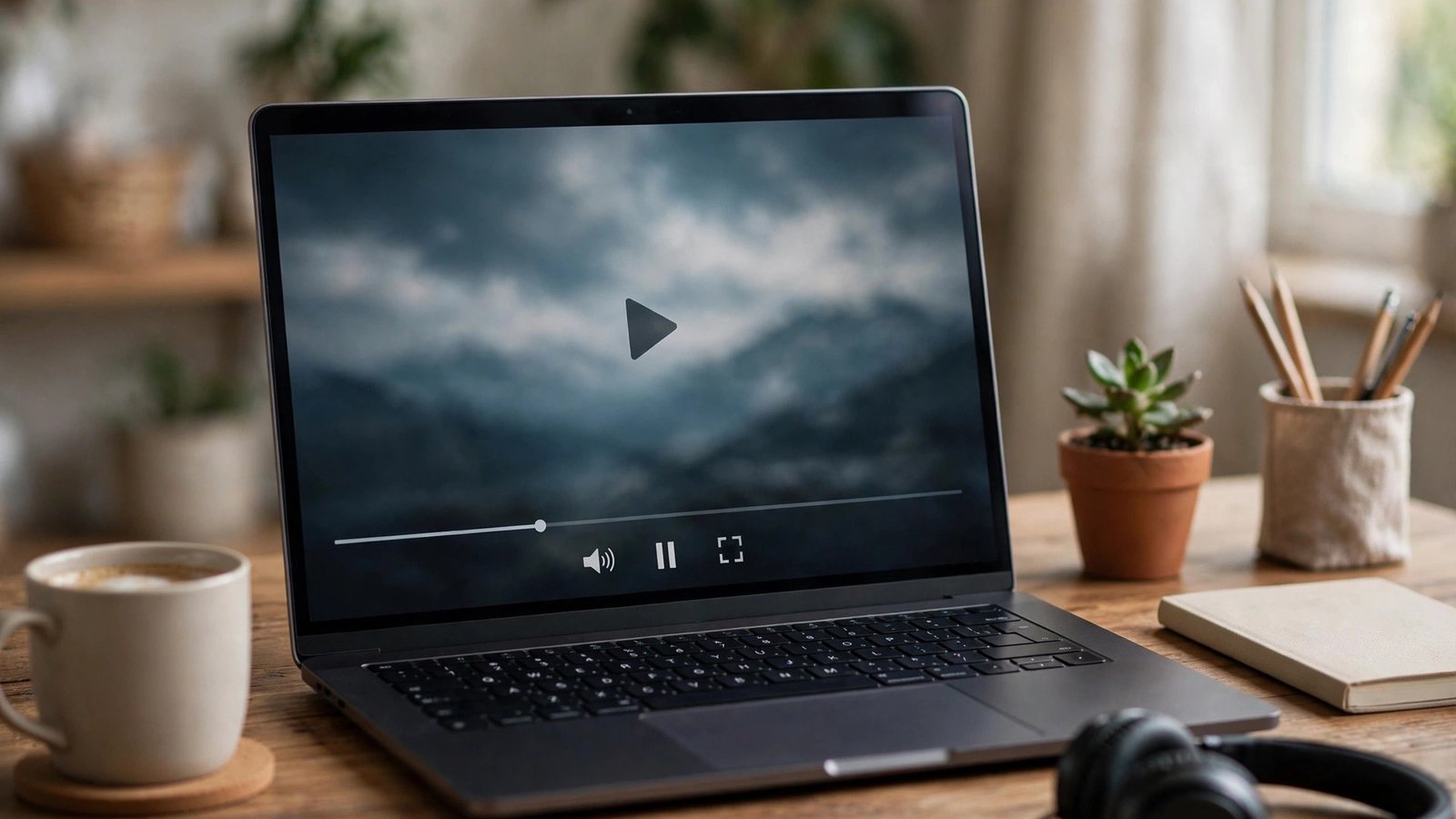
The feature list of VLC is long, but most beginners only need to know a handful of things. These are the ones that genuinely matter in everyday use.
This is still the headline reason to install VLC. In our experience, it handles the common formats — MP4, MKV, AVI, MOV — and a wide range of audio files like MP3, FLAC, and OGG without any extra setup.
It also copes well with damaged or incomplete files. A half-downloaded video that other players refuse to touch will often at least partially play in VLC, which can be a lifesaver if you are trying to preview a download.
VLC makes working with subtitles refreshingly simple. You can load an external subtitle file with a couple of clicks, and if a video has multiple subtitle or audio tracks built in, switching between them takes seconds. It also lets you adjust subtitle timing when the text is slightly out of sync with the dialogue — a small feature that feels like magic the first time you use it.
For anyone watching foreign films, online courses, or shows in a second language, this subtitle handling alone is worth the install.
Beyond local files, VLC can play media from across your home network and from direct stream links. If you have videos stored on another computer or a network drive, you can open them in VLC without copying them over first.
This is more of a power-user feature, but it is genuinely useful in households where media lives on more than one device.
VLC includes the small quality-of-life tools that people actually use: adjustable playback speed for speeding through lectures or slowing down tutorials, an audio equalizer, the ability to take snapshots of the video, and basic conversion between some media formats. There is also a loop and repeat function that works exactly as you would expect.
None of these features is revolutionary on its own, but together they mean you rarely need to open a second app to finish a simple task.

VLC is available on desktop and mobile, and that consistency is part of its appeal. On Windows and Mac, the desktop version is the full experience: every feature described above, plus deep settings for anyone who wants them. Installation is straightforward, and it does not bundle unwanted extra software — something worth appreciating in a world of installers full of checkboxes.
On Android and iPhone, the mobile app covers the essentials well. It plays local video files, handles subtitles, and works with network shares, which makes it handy for watching downloaded shows on a commute or a flight. The mobile interface is simpler than the desktop one, but the core promise — open the file, watch the file — works the same.
One thing to note: VLC does not sync anything between your devices on its own. There is no cloud account, so your playlists and settings on your laptop will not automatically appear on your phone. If you want the same experience everywhere, you will set it up separately on each device.
An honest review has to cover the weak spots, and VLC has a few that are worth knowing before you install it.
First, music library management is basic. If you are looking for a polished music collection with smart playlists, album artwork browsing, and syncing to your phone, VLC is not that app. It plays music files perfectly well, but organizing a large library feels clunky compared to dedicated music software.
Second, the interface looks dated. It is functional and everything is where you expect it to be, but next to modern streaming apps it feels plain. The mobile app looks fresher than the desktop one, but neither will win design awards. Some users genuinely do not mind — the player stays out of the way, which is arguably the point — but if a sleek interface matters to you, this is a real downside.
Third, as mentioned above, there is no cloud sync of its own. No account, no cross-device continuity, no watch history that follows you around. For a free tool this is understandable, but it is a gap compared with the streaming services most people use daily.
Finally, VLC will not replace streaming. It plays files and streams you point it at; it does not offer a catalog of shows, recommendations, or offline downloads from subscription services. That was never its job, but beginners sometimes expect it to be a one-stop entertainment app. It is not — it is a player, and a very good one.
VLC is ideal for anyone who regularly deals with video files: students watching recorded lectures, people with a collection of downloaded movies or shows, anyone who receives video files from friends or colleagues in odd formats, and language learners who rely on subtitles. If you have ever seen a “codec missing” error, VLC is the cure.
It is also a great second player. Even if you mostly stream, keeping VLC installed costs nothing and takes up little space. The day a file will not open anywhere else, you will be glad it is there.
Who can skip it? If you watch everything through streaming apps and never handle video files directly, you may never open it. Likewise, if you want a beautiful music library or a synced watch-across-devices experience, look at dedicated music apps or streaming services instead.
Yes — with realistic expectations. VLC in 2026 is exactly what it has always been: a free, open-source, no-ads player that handles almost any file you give it. It has not tried to become a streaming service or a social app, and that focus is its strength.
The interface is plain, the music library tools are basic, and there is no cloud sync. None of that matters much for its core job. When a video needs to play, VLC plays it. Few pieces of software have earned trust the way this one has, and in our experience it remains the most reliable free video player you can install.
Our advice: install it, keep it updated, and let it sit quietly until you need it. You will need it sooner than you think.
VLC Media Player has survived for decades by doing one thing exceptionally well: playing your media without drama. Our 2026 review finds it just as dependable as ever — free, open-source, ad-free, and compatible with a huge range of formats on desktop and mobile.
It is not a streaming service, not a music library, and not a design showcase. But as a video player, it remains the safest free download in its category. If it is not on your device already, this is your sign to fix that.
Yes. VLC is completely free to download and use, with no ads, no premium tier, and no locked features. It is developed by the nonprofit VideoLAN project and released as open-source software, which means anyone can inspect or contribute to its code.
VLC itself is safe, but you should always download it from the official VideoLAN website rather than third-party download portals. Unofficial sites sometimes bundle extra software with installers, so sticking to the official source is the golden rule for any free software.
In our experience, yes — often better than any other player. VLC can frequently play partially downloaded or slightly corrupted files, at least enough to preview them. It will not repair a file, but it is remarkably forgiving about opening files that other players reject outright.
Yes. Alongside Windows and Mac, VLC offers mobile apps for Android and iPhone that cover the essentials: local file playback, subtitles, and network streaming. Keep in mind there is no cloud sync between devices, so each install is set up independently.

